 EN
EN

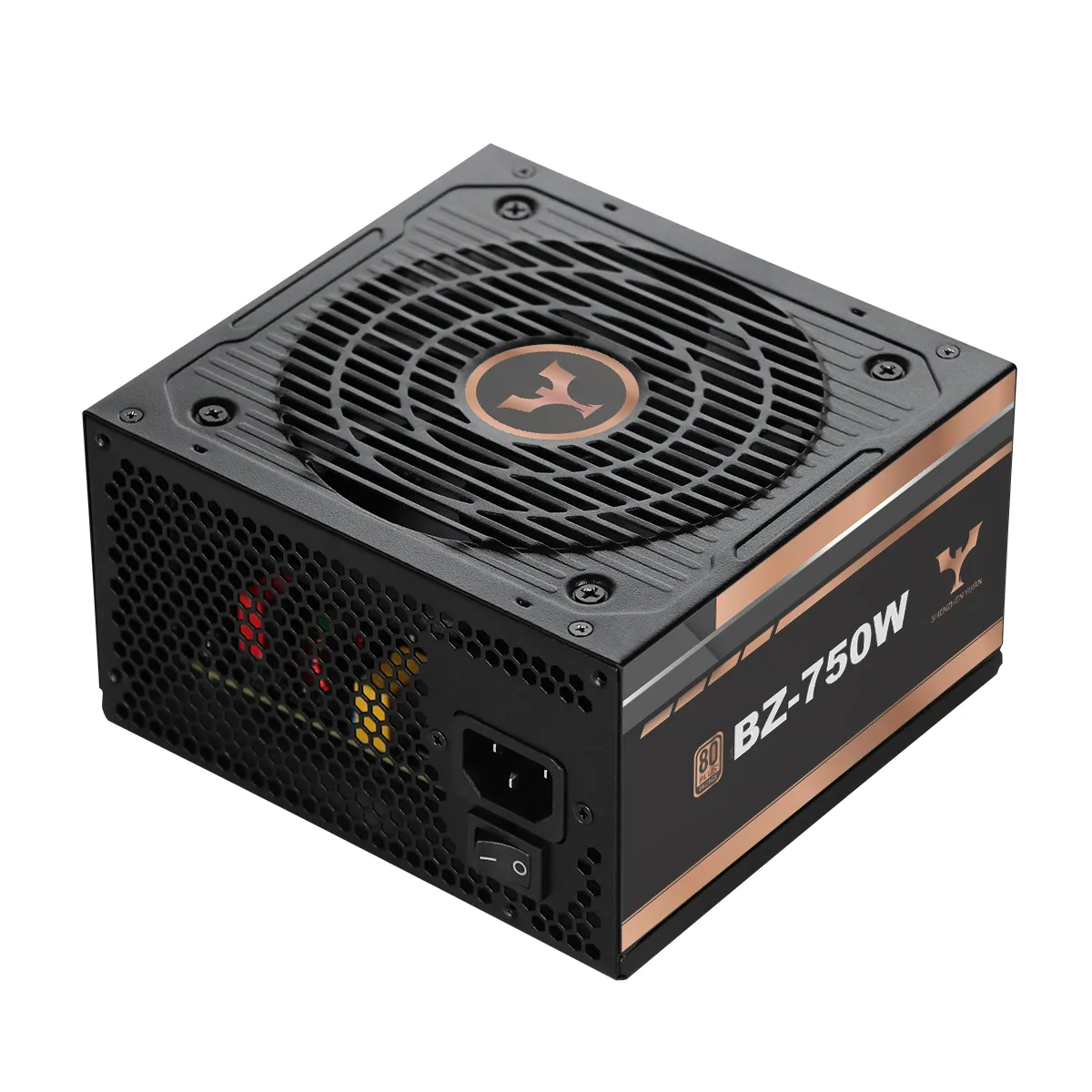
How AC-to-DC Conversion Impacts PC Power Supply Efficiency
Switched-mode design and sources of conversion loss (conduction, switching, core losses)
Modern PC power supplies use switched-mode architecture to convert AC to DC efficiently. The process begins with rectifying incoming AC into high-voltage DC, followed by high-frequency switching—typically via MOSFETs—before stepping down voltage through a transformer and final rectification. Each stage introduces distinct losses: conduction losses stem from resistive heating in semiconductors and PCB traces; switching losses occur during MOSFET turn-on/turn-off when voltage and current overlap transiently; and core losses, driven by hysteresis and eddy currents, heat the transformer’s ferrite material under rapid flux changes. Collectively, these can erode efficiency by 10–20% in suboptimal designs. Mitigation relies on low-RDS(on) MOSFETs, high-permeability ferrite cores, and tightly optimized PCB layouts—all critical levers for approaching a PSU’s rated efficiency ceiling.
Active vs. passive power factor correction (PFC) and their effect on real-world PC power supply efficiency
Power factor correction (PFC) aligns input current with the AC voltage waveform, minimizing reactive power that burdens infrastructure without delivering useful work. Passive PFC uses simple inductors or capacitors to smooth current draw but caps power factor at ~0.7–0.8 and demands bulky components. In contrast, active PFC employs a dedicated boost converter to dynamically shape current into a near-perfect sine wave—achieving power factors above 0.95. For typical PC power supplies, this cuts RMS input current by nearly half and peak current by over 75% compared to non-PFC units. The result is reduced thermal stress on wiring and circuit breakers, improved stability across load fluctuations, and compliance with global energy standards like EN 61000-3-2. As such, active PFC is now essential in any modern PSU intended for commercial or enterprise deployment.
Load Level and Voltage Input: Key Variables in PC Power Supply Efficiency
A PC power supply does not deliver uniform efficiency across all operating conditions. Efficiency varies significantly with the amount of load drawn and the voltage supplied from the wall. Understanding these relationships helps buyers select a unit that saves energy and runs cooler in real-world use.
Why peak efficiency occurs near 50% load—and how efficiency drops at light and heavy loads
Most modern PC power supplies achieve peak efficiency—typically 90–94%, depending on certification tier—near 50% load. At this point, switching and conduction losses balance optimally. Below 20% load, fixed overheads from standby circuits and controllers dominate, dragging efficiency down to 78–82%. Above 80% load, I²R heating in MOSFETs and magnetics accelerates sharply, often reducing efficiency by 3–5 percentage points. For example, a 750 W unit may reach 91% at 375 W but fall below 87% at 700 W. This parabolic efficiency curve is inherent to switched-mode topology. B2B buyers should therefore size PSUs to match typical system load, not peak theoretical demand, to keep operation within the efficiency “sweet spot.”
115V vs. 230V input: impact on efficiency, heat, and compatibility with global PC power supply standards
Input voltage significantly influences real-world performance. A PC power supply operating on 230 V—standard in Europe, Asia, and Australia—typically delivers 2–4 percentage points higher efficiency than the same unit on 115 V (North America, Japan). Higher voltage reduces input current, directly lowering conduction losses in the rectifier bridge and primary-side components. It also diminishes I²R heating, enabling quieter fan operation and improving overall thermal efficiency. Conversely, 115 V operation increases stress on input-stage components and often necessitates higher-rated parts. For global deployments, selecting a universal-input PSU (100–240 V, 50/60 Hz) and verifying its published efficiency curves at both voltages ensures consistent energy savings and reliability across regions.
Critical Components and Thermal Design in Modern PC Power Supplies
MOSFETs, capacitors, and inductors: how material quality and layout reduce losses in PC power supply units
Efficiency hinges on component-grade selection and intelligent PCB integration. Silicon carbide (SiC) MOSFETs cut switching losses by up to 70% versus silicon equivalents while supporting higher junction temperatures—a key advantage highlighted in the Power Semiconductor Journal (2023). High-grade electrolytic capacitors with low equivalent series resistance (ESR ≤15 mΩ) dissipate less energy as heat and sustain up to 30% longer operational life than budget alternatives. Planar magnetics, oriented perpendicularly to airflow, suppress electromagnetic interference (EMI) coupling and improve conversion efficiency by up to 1.5 percentage points over conventional solenoid inductors.
Thermal management strategies—fan curves, heatsink design, and derating—that sustain long-term efficiency
Intelligent thermal regulation balances acoustic performance with sustained cooling efficacy. PSUs using fluid dynamic bearing (FDB) fans remain silent below 40% load while doubling bearing lifespan versus sleeve-bearing alternatives. Extruded aluminum heatsinks paired with nickel-plated copper bases offer 25% higher thermal conductivity than anodized variants, effectively managing heat from primary switching components.
| Thermal Management Strategy | Core Benefit | Impact on PSU Efficiency |
|---|---|---|
| Smart Fan Curves | Reduced acoustic noise | Sustains >90% efficiency via controlled airflow |
| Stacked-Fin Heatsinks | 15–20% higher surface area | Lowers hotspot temperatures by ≤15°C |
| Component Derating | Components operate at ≤75% rated capacity | Decreases failure rate by 40% (IEC 62378-1) |
Passive cooling enables hybrid 0 dB operation up to 60% load, while disciplined derating protocols prevent accelerated capacitor aging—the leading cause of efficiency decay exceeding 2% annually in sustained 50°C environments. Together, these strategies help maintain >93% peak efficiency over 100,000-hour operational lifecycles.
Certifications and Real-World Benefits of High-Efficiency PC Power Supplies
80 PLUS Tiers (Bronze to Titanium) and Cybenetics ETA Ratings Explained for B2B Buyers
The 80 PLUS certification program provides standardized, third-party-validated benchmarks for PSU efficiency. Tiers range from Bronze (≥82% at 50% load) to Titanium (≥94% at 20%, 50%, and 100% loads), with testing conducted across multiple load points to reflect real-world variability. A 1000 W Titanium-rated PSU, for instance, dissipates just 60 W as heat at full load—compared to 170 W for an uncertified unit—directly translating to lower cooling demands and infrastructure strain. Complementing this, Cybenetics ETA ratings apply stricter test protocols—including variable-line-voltage sweeps and noise profiling—to deliver granular insights into efficiency behavior and acoustic output, making them especially valuable for enterprise procurement teams evaluating total cost of ownership.
Calculating ROI: Electricity Cost Savings, Reduced Cooling Demand, and Extended System Lifespan
High-efficiency PC power supplies deliver measurable financial returns in commercial environments:
- Energy savings: A Titanium-certified PSU operating at 94% efficiency consumes roughly 100 W less annually than an 85% efficient model under constant 500 W load—yielding ~$740 in annual electricity savings at $0.15/kWh.
- Cooling overhead reduction: Lower heat output cuts data center HVAC demand by up to 30%, amplifying energy savings beyond the PSU itself.
- Lifetime durability: Reduced thermal stress extends capacitor lifespan by 40–60% in high-efficiency units (Ponemon Institute, 2023), decreasing maintenance frequency and replacement costs.
Combined, these advantages deliver ROI within 18–24 months for enterprise PC fleets—confirming that premium efficiency certifications are not just technical differentiators, but sound strategic investments in long-term IT sustainability and budget discipline.
FAQ
What is the role of switching, conduction, and core losses in PSU efficiency?
Switching losses occur during transient current and voltage overlaps in MOSFETs, conduction losses stem from resistive heating in circuits, and core losses arise from transformer hysteresis and eddy currents. Collectively, they reduce overall PSU efficiency.
What is the difference between active and passive power factor correction (PFC)?
Passive PFC uses larger components to smooth current but provides lower power factor (~0.7–0.8). Active PFC uses a boost converter for dynamic shaping, achieving power factors >0.95 with reduced thermal and wiring stress.
How does input voltage impact PSU efficiency?
A PC PSU operating at 230V typically delivers 2–4% higher efficiency than at 115V, reducing conduction and I²R losses, and achieving better thermal performance.
Why is PSU efficiency highest around 50% load?
The balance between switching and conduction losses is optimized near 50% load, achieving peak efficiency (90–94%). Efficiency tends to drop at light and heavy loads due to overheads and increased heating.
What do 80 PLUS and Cybenetics ETA certifications indicate?
80 PLUS certification tiers measure PSU efficiency under various loads (e.g., Titanium requires ≥94% efficiency). Cybenetics ratings provide detailed insights into efficiency and acoustic performance for enterprise buyers.
Table of Contents
- How AC-to-DC Conversion Impacts PC Power Supply Efficiency
- Load Level and Voltage Input: Key Variables in PC Power Supply Efficiency
- Critical Components and Thermal Design in Modern PC Power Supplies
- Certifications and Real-World Benefits of High-Efficiency PC Power Supplies
-
FAQ
- What is the role of switching, conduction, and core losses in PSU efficiency?
- What is the difference between active and passive power factor correction (PFC)?
- How does input voltage impact PSU efficiency?
- Why is PSU efficiency highest around 50% load?
- What do 80 PLUS and Cybenetics ETA certifications indicate?