 EN
EN

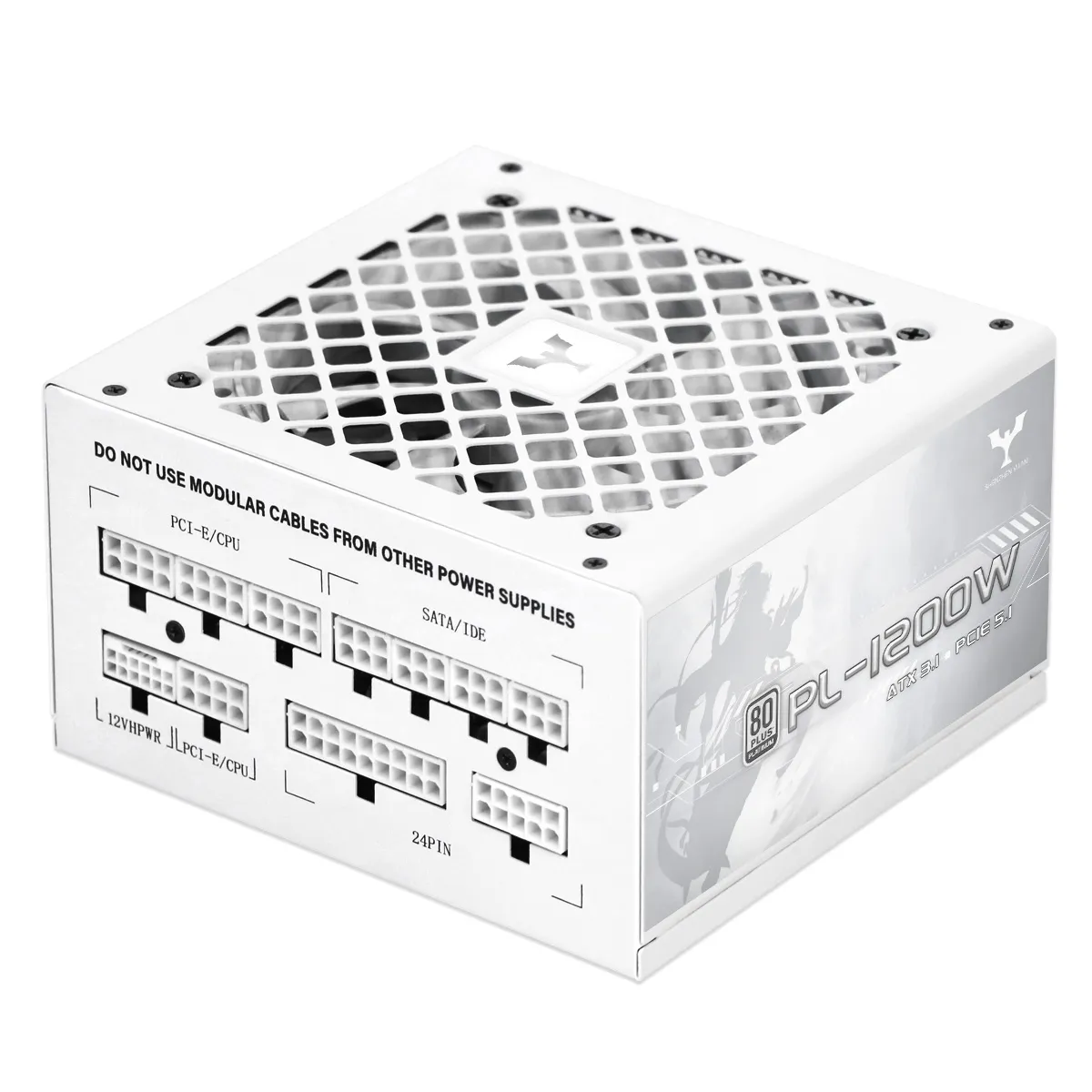
What Is a Modular Power Supply and How Does It Differ from Traditional PSUs?
A modular power supply (PSU) features detachable cables that connect only to required components, unlike traditional non-modular units with permanently fixed wiring. This core design difference enables IT teams to eliminate unused cabling, reducing clutter in server racks by up to 40%—a finding supported by airflow efficiency studies conducted by the U.S. Department of Energy’s Data Center Optimization Program. While traditional PSUs force administrators to manage excess cables—restricting ventilation and complicating maintenance—modular variants empower precise customization. For example, upgrading a GPU or storage array requires swapping only specific cables rather than wrestling with entire wiring harnesses. Though modular units typically cost 15–30% more upfront, they reduce long-term operational expenses through streamlined scalability and measurable cooling efficiency gains—making them indispensable for dynamic enterprise environments where hardware configurations evolve frequently.
Key Advantages of Modular Power Supply for Data Centers and Server Racks
Improved Cable Management and Airflow Optimization
Modular power supplies enable selective cable connection, eliminating unused wiring that obstructs airflow in high-density server racks. This streamlined approach enhances thermal management: unrestricted airflow prevents hot spots linked to accelerated hardware degradation, lowering failure risk by up to 22% according to a 2022 ASHRAE Technical Committee report. Simplified cable paths also accelerate maintenance—technicians replace components 30% faster without navigating tangled wires. The resulting energy savings from optimized cooling can reduce operational costs by 15–25% annually, while extended hardware lifespan delays capital expenditures.
Scalability and Future-Proofing for Hardware Upgrades
The modular architecture allows incremental power infrastructure expansion without full system replacements. When adding servers or storage, IT teams attach only necessary cables to existing units—avoiding rewiring downtime that costs enterprises an average of $5,600 per minute (Gartner, 2023). This scalability supports phased technology adoption like GPU clusters or liquid-cooled racks. By decoupling cable investments from core power units, organizations achieve 35% lower upgrade costs and extend PSU lifecycle by 4–7 years. Such flexibility future-proofs data centers against evolving computational demands while maintaining 99.995% uptime during transitions.
Types of Modular Power Supply: Fully, Semi-, and Non-Modular Compared
Modular power supplies fall into three distinct categories, each offering unique trade-offs in cable management, airflow, and upgrade flexibility for enterprise environments:
- Fully Modular: All cables detach from the unit. This eliminates unused wiring, reducing clutter and improving airflow by up to 15% compared to fixed-cable designs—validated by independent thermal testing at the Lawrence Berkeley National Laboratory. Ideal for high-density server racks where thermal efficiency is critical.
- Semi-Modular: Essential cables (e.g., 24-pin ATX) are fixed, while peripheral connectors (SATA/PCIe) are removable. Balances cost and cable management, suitable for standard server configurations.
- Non-Modular: All cables are permanently attached. Though economical, excess wiring restricts airflow and complicates upgrades—often increasing maintenance time by 30% in large-scale deployments, as observed in Uptime Institute’s 2023 Infrastructure Resilience Survey.
Key Differences at a Glance
| Feature | Non-Modular | Semi-Modular | Fully Modular |
|---|---|---|---|
| Cable Removal | None | Partial | Full |
| Airflow Impact | High obstruction | Moderate | Minimal |
| Upgrade Ease | Low | Medium | High |
| Cost Efficiency | Highest | Balanced | Premium |
Fully modular units support future hardware expansions seamlessly, while non-modular PSUs may require complete replacement during upgrades. Thermal testing shows modular designs lower internal temperatures by 2–4°C under load, enhancing component longevity. For enterprises prioritizing scalability, fully modular systems deliver the highest ROI despite upfront costs.
How to Choose the Right Modular Power Supply for Your B2B Infrastructure
Matching Wattage, Efficiency (80 PLUS), and Form Factor
Start by calculating your system’s peak power draw using enterprise-grade monitoring tools—such as those integrated into Dell OpenManage or HPE iLO—and add a 20–30% buffer for operational headroom. Select a modular power supply with 80 PLUS Gold or Platinum certification: these units achieve 90–94% efficiency under typical loads, reducing data center cooling costs by up to 15%, per the 80 PLUS® Program’s 2023 benchmark report. Ensure physical compatibility by verifying form factors like ATX12VO or proprietary server chassis dimensions. Oversized units waste resources; undersized ones risk shutdowns during critical operations.
Certifications, Redundancy, and OEM Compatibility Considerations
Prioritize UL/CE safety certifications and validate OEM compatibility through vendor documentation—proprietary connectors in rack servers often require specific pinouts defined in the Server System Architecture (SSA) specification. Implement N+1 redundancy configurations where possible; dual modular power supplies prevent single-point failures during outages. For hyperscale environments, consider hot-swappable units that maintain uptime during maintenance. Always cross-reference voltage tolerances (±3%) with your hardware specifications to avoid compatibility issues—this alignment is mandated in the IEC 62368-1 safety standard for IT equipment.
FAQ
What is a modular power supply?
A modular power supply, or PSU, is a type of power supply unit where cables are detachable, allowing you to use only the necessary cables for your setup, reducing clutter and improving airflow.
What are the main benefits of using a modular power supply?
The main benefits include improved cable management, better airflow optimization, scalability for future upgrades, and reduced operational costs in data centers.
What are the differences between fully, semi-, and non-modular power supplies?
Fully modular power supplies have all detachable cables, semi-modular have a mix of fixed and removable cables, and non-modular power supplies have all cables fixed.
How does a modular power supply improve airflow?
By using only necessary cables, modular power supplies reduce clutter, which allows for better airflow and cooling efficiency.
Why might businesses opt for more expensive modular power supplies?
Businesses might choose modular power supplies for their long-term operational savings, improved scalability, and better cooling efficiencies, which help maintain hardware longevity.