 EN
EN

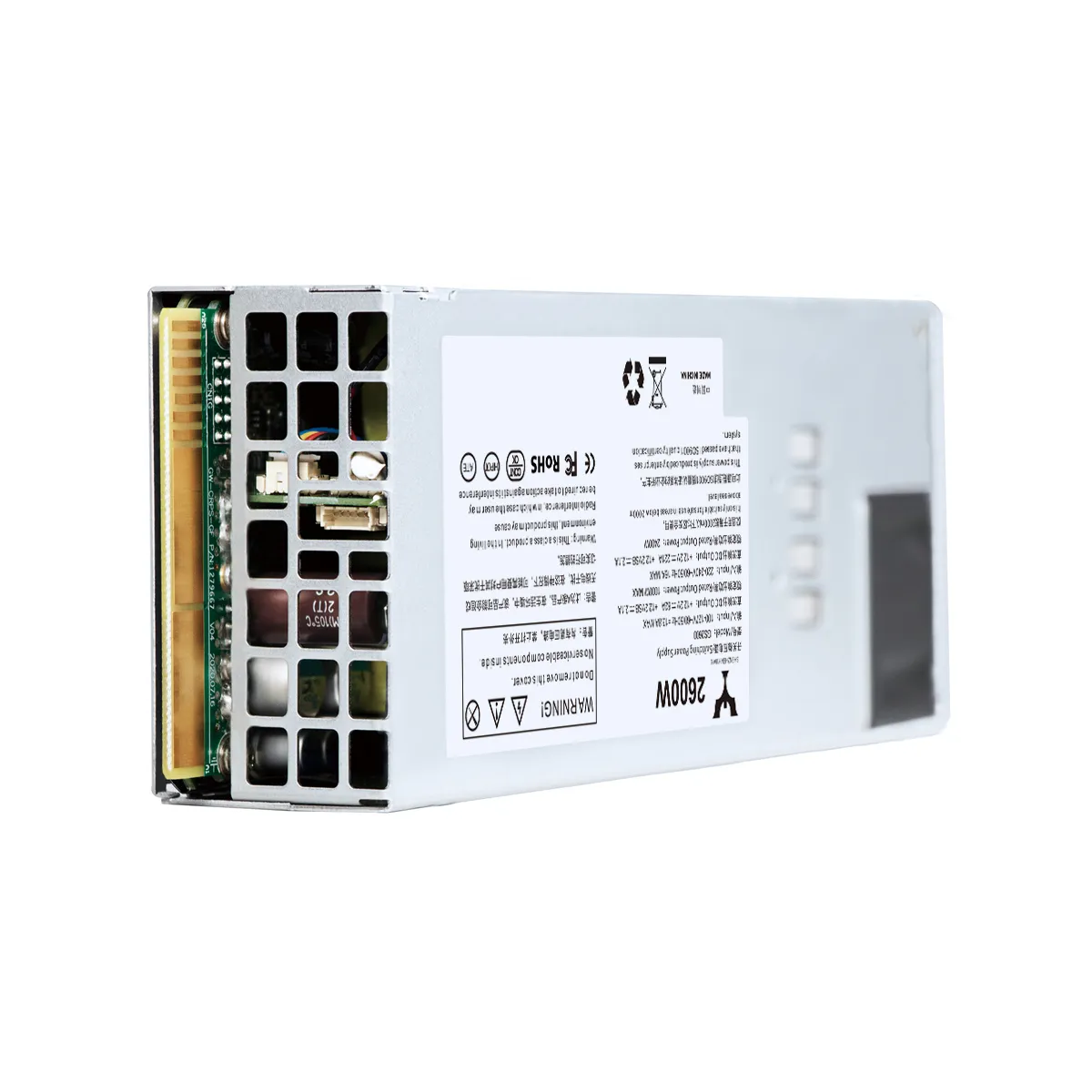
Essential Safety Certifications for Redundant Power Supply Hardware
Any enterprise deploying a redundant power supply must ensure the hardware meets critical safety standards. These certifications are not bureaucratic formalities—they are engineering guarantees against catastrophic failure, fire, or electric shock. Without them, redundancy remains theoretical; a single faulty internal component can negate the entire safety and availability benefit.
UL 1778 and UL 62368-1: Critical Safety Standards for UPS and Power Conversion in Redundant Power Supply Designs
For Uninterruptible Power Supplies (UPS)—a cornerstone of redundant power architectures—UL 1778 is the definitive North American safety standard. It rigorously evaluates electrical shock, energy hazards, and fire risks specific to UPS systems. Meanwhile, modern IT infrastructure—including servers, switches, and power distribution units—falls under UL 62368-1, a hazard-based safety standard for information and audio/video equipment. This forward-looking framework replaces legacy standards like UL 60950-1 and UL 60065, emphasizing risk assessment over prescriptive design rules. Together, UL 1778 and UL 62368-1 form the foundational safety benchmark for procurement decisions in enterprise environments where redundant power supply integrity is non-negotiable.
IEC 62040-1: Global Performance and Safety Benchmark for Redundant Power Supply Systems
Global deployments require alignment with internationally recognized benchmarks—and IEC 62040-1 is the cornerstone standard for UPS safety worldwide. It defines acceptable risk levels for operators and infrastructure by specifying limits on touch current, insulation resistance, and thermal performance under load. Unlike regional standards, IEC 62040-1 supports harmonized testing across markets, enabling consistent validation of fault containment and personnel protection. For multinational enterprises, requiring dual compliance with both UL 1778/62368-1 and IEC 62040-1 ensures that redundant power supply hardware delivers concurrent maintainability and operational safety regardless of geography—without compromising on reliability or regulatory acceptance.
Data Center Infrastructure Certifications Validating Redundant Power Supply Architecture
Uptime Institute Tier III & Tier IV: Concurrent Maintainability and Fault Tolerance Requirements for Redundant Power Supply Deployment
Uptime Institute Tier III and Tier IV certifications validate the real-world resilience of a facility’s redundant power supply architecture—not just its components, but how they integrate into a fault-tolerant system. Tier III mandates N+1 redundancy and concurrent maintainability: every power path must be independently serviceable without disrupting operations. This forces robust design of automatic transfer switches (ATS), static switches, and battery systems—all essential elements within a redundant power supply chain. Tier IV goes further, requiring full fault tolerance: each component must operate on an isolated, physically separate path, enabling uninterrupted operation even during unplanned failures. Achieving either tier demands third-party verification of power continuity under simulated failure scenarios—making them powerful indicators for B2B buyers prioritizing 99.999% uptime.
TIA-942-B: Standardized Validation of Dual-Feed, N+1, and Distributed Redundant Power Supply Configurations
TIA-942-B provides a vendor-agnostic, infrastructure-level framework for validating redundant power supply topologies—from utility feed through rack-level PDUs. It explicitly codifies requirements for dual-feed power delivery (two independent sources per IT load), as well as N+1, 2N, and distributed redundancy models. Crucially, it standardizes installation practices, grounding methods, and commissioning tests—reducing integration risk when combining redundant power supply hardware from multiple suppliers. For infrastructure managers, TIA-942-B certification adds audit-ready traceability, simplifying compliance reviews with customers, insurers, or regulators. When paired with Uptime Institute tier ratings, it completes the assurance picture: one standard confirms how the redundant power supply is built; the other proves how well it performs under stress.
Emerging Compliance Frameworks for Next-Generation Redundant Power Supply Systems
UL 9540A and BESS Integration: Thermal Runaway Testing for Redundant Power Supply Systems with Energy Storage
As lithium-ion battery energy storage systems (BESS) become integral to next-generation redundant power supply designs—enabling longer runtime, grid independence, and dynamic load management—thermal safety has moved to the forefront. UL 9540A addresses this by defining a standardized test methodology to evaluate thermal runaway propagation within battery modules and packs. It measures gas venting behavior, temperature escalation rates, and flame spread under controlled cell-failure conditions. For data centers and mission-critical facilities, passing UL 9540A—or equivalent nationally recognized testing—is now essential before integrating BESS into a redundant power supply architecture. This validation ensures that a single-cell failure remains contained, preserving system uptime and eliminating hidden fire hazards that could otherwise undermine the core reliability promise of redundancy.
FAQ
What are the key safety certifications for redundant power supply hardware?
The key certifications include UL 1778 and UL 62368-1 for North American safety standards, IEC 62040-1 for global safety benchmarks, and UL 9540A for thermal safety testing of energy storage systems.
Why is UL 62368-1 important for modern IT infrastructure?
UL 62368-1 replaces legacy standards like UL 60950-1 and UL 60065, emphasizing risk-based safety assessments over fixed design rules, thereby ensuring better compliance for audio, video, and IT equipment.
How do Uptime Institute Tier III and Tier IV certifications impact redundant power design?
Tier III requires N+1 redundancy and concurrent maintainability, while Tier IV demands full fault tolerance with isolated power paths, ensuring uninterrupted operation during failures.
What does UL 9540A evaluate for energy storage systems?
UL 9540A evaluates thermal safety by testing thermal runaway propagation, gas venting behavior, and temperature escalation rates within lithium-ion battery modules and packs.