 EN
EN

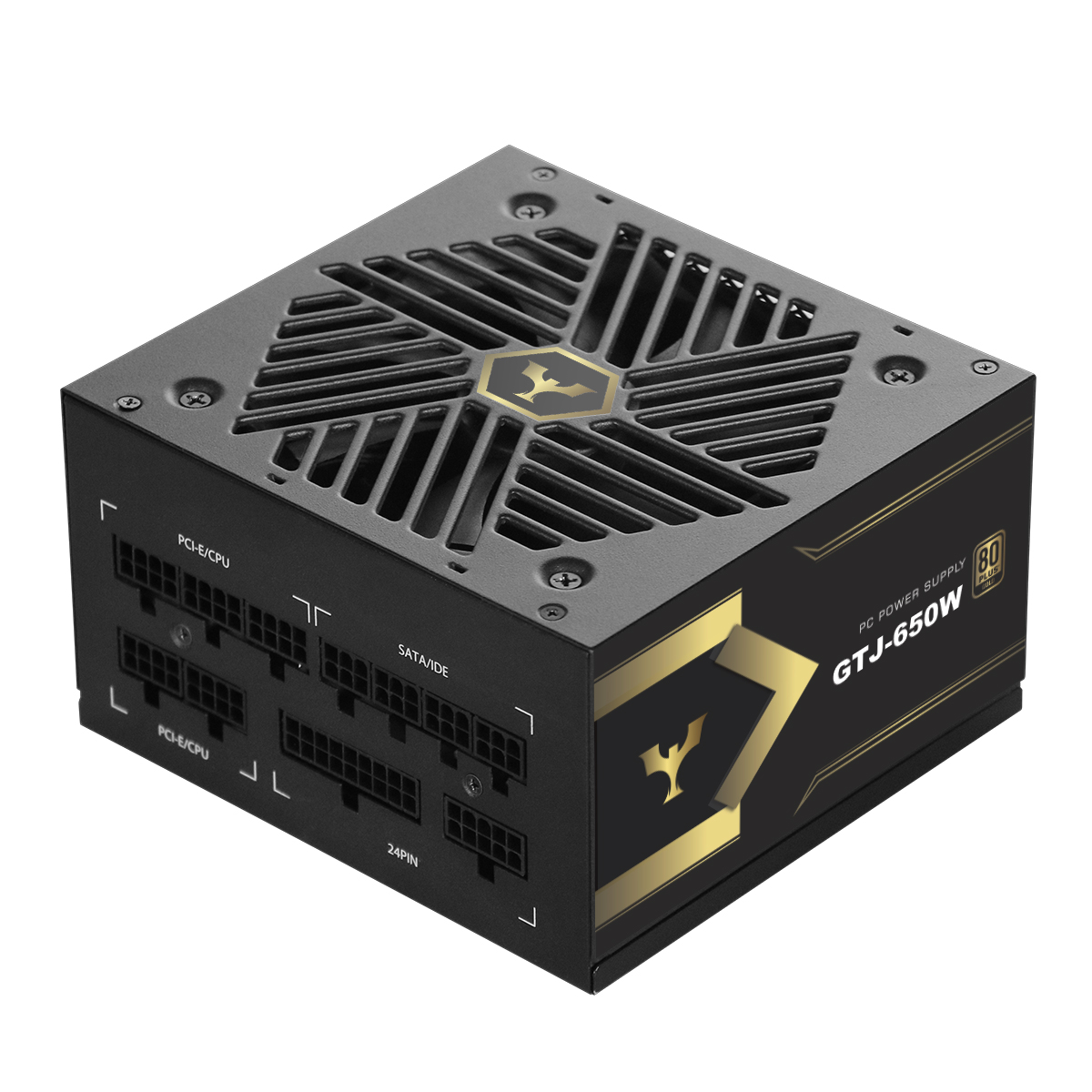
Cable Management and Airflow Benefits of a Full Modular PC Power Supply
How full modularity eliminates cable clutter and enhances chassis airflow
A full modular PC power supply lets you connect only the cables you actually need—reducing internal clutter by up to 40% compared to fixed-cable models. This precision routing creates unobstructed air pathways, especially critical in mid-tower cases where space around the motherboard tray directly affects cooling efficiency. The result is measurable thermal improvement:
- Unused cable elimination: Detach SATA, Molex, or PCIe cables when not required
- Directional airflow optimization: Remove physical barriers blocking intake and exhaust fans
- Simplified maintenance: Swap components without untangling fixed harnesses
This cleaner layout also reduces dust accumulation in cable channels—a subtle but meaningful factor in long-term thermal stability, particularly in GPU-intensive systems where heat concentrates near the top and rear of the chassis.
Thermal performance comparison: Temperature delta vs. semi- and non-modular units (80 PLUS Platinum benchmark data)
Independent thermal testing of identically rated 80 PLUS Platinum PSUs under 70% load shows consistent cooling advantages for full modular designs:
| PSU Type | Avg. CPU Temp (°C) | GPU Cluster Delta | Noise Reduction |
|---|---|---|---|
| Non-modular | 74 | +5.2° | Baseline |
| Semi-modular | 71 | +3.1° | -2dB(A) |
| Full modular | 68 | Baseline | -5dB(A) |
These 5–8°C improvements stem from unimpeded airflow over voltage regulators, VRMs, and memory modules—critical for sustaining boost clocks during sustained workloads or overclocking. The reduced acoustic signature (-5dB on average) further confirms lower system turbulence, a direct benefit of eliminating cable-induced airflow resistance.
Aesthetic Appeal and Build Flexibility for Modern PC Builds
Clean routing, RGB synchronization, and visual impact in SFF and showcase builds
Full modularity transforms case aesthetics by removing every unused cable—making it indispensable for small form factor (SFF) and showcase builds. In compact chassis like the NR200 or FormD T1, fixed cable bundles force awkward bends or wasted length that compromise both airflow and visual coherence. With full modularity, builders route only what’s needed, achieving tight, clean lines that support minimalist or high-RGB themes alike. RGB fans, strips, and water-cooling blocks stand out without visual competition from excess wiring. Enthusiasts frequently pair modular PSUs with custom-sleeved cables to match color schemes—turning internal organization into a deliberate design statement.
Long-term upgrade readiness: Supporting PCIe Gen5, new GPUs, and motherboard form factors without cable constraints
Full modularity future-proofs your build. When upgrading to PCIe Gen5 GPUs requiring 12V-2x6 connectors—or switching between ATX, mITX, or E-ATX motherboards—you simply install or remove the corresponding cable. There’s no need to manage incompatible harnesses, repurpose adapters, or risk connector strain from forced routing. This adaptability saves time and preserves connector integrity across multiple upgrade cycles, especially as power delivery standards evolve toward higher amperage and new pinouts. For builders who refresh hardware every 2–3 years, this isn’t convenience—it’s operational resilience.
Cost-Benefit Analysis: When a Full Modular PC Power Supply Delivers Real Value
Premium pricing breakdown: $20–$60 extra across 650W–1000W tiers
Full modular PSUs carry a $20–$60 premium over semi- and non-modular equivalents in the 650W–1000W range. This reflects engineering complexity—not just bespoke connectors and reinforced terminations, but rigorous validation of repeated plugging/unplugging cycles per cable. While budget-focused builders may view this as overhead, it’s better understood as an investment in longevity and flexibility: selective cabling prevents airflow degradation, simplifies troubleshooting, and avoids recurring costs tied to adapter purchases or PSU replacements during major upgrades.
Use-case ROI matrix: Low-value in standard gaming towers vs. high-value in SFF, ITX, and enthusiast builds
The return on investment for full modularity depends entirely on use case. In spacious ATX towers with generous routing space, cable ties and Velcro can effectively manage excess wiring—making the premium harder to justify. But in SFF and Mini-ITX systems, the value is clear: a 2023 chassis thermal analysis found full modular units lowered GPU temperatures by 3–5°C versus non-modular equivalents, solely due to optimized airflow paths. Similarly, enthusiast builds benefit from precise cable-length customization, streamlined PCIe Gen5 transitions, and seamless RGB integration—where modularity shifts from aesthetic preference to functional necessity.
Understanding the Modularity Spectrum: Full vs. Semi- vs. Non-Modular PC Power Supply Trade-Offs
PC power supplies fall into three modularity tiers—non-modular, semi-modular, and full modular—each suited to different priorities. Non-modular units feature permanently attached cables, offering the lowest cost but minimal routing control. Semi-modular designs fix essential cables (24-pin ATX, 8-pin CPU) while allowing peripheral cables to be detached—a pragmatic balance for mainstream builds. Full modular variants enable complete cable detachment, delivering maximum customization and airflow efficiency for high-end or space-constrained systems.
Key distinctions include:
| Feature | Non-Modular | Semi-Modular | Full Modular |
|---|---|---|---|
| Cable Removal | Not possible | Partial (peripheral) | Full |
| Cable Management | Difficult | Moderate | Excellent |
| Airflow Impact | High obstruction | Reduced obstruction | Minimal obstruction |
| Upgrade Flexibility | Low | Medium | High |
| Cost Premium | None | $10–$30 | $20–$60 |
Non-modular remains viable for entry-level or server-style builds where aesthetics and airflow are secondary. Semi-modular suits most ATX gaming towers seeking a middle ground. Full modular excels where space, thermal headroom, and visual cohesion are non-negotiable—particularly in SFF, ITX, and enthusiast-oriented systems. Your choice should align with case constraints, upgrade cadence, and how much you value internal order as a foundational element of system performance.
FAQ
What is a full modular PC power supply?
A full modular PC power supply allows you to detach all cables, providing optimal customization and eliminating unused cables for better cable management and airflow.
Why is cable management important in a modular power supply?
Proper cable management reduces clutter, improves airflow within the chassis, lowers dust accumulation, and enhances long-term thermal stability.
How much more do full modular PSUs cost compared to other types?
Full modular PSUs typically cost $20–$60 more than semi- and non-modular models due to increased engineering complexity and added benefits.
What are the thermal benefits of using a full modular PSU?
Full modular PSUs reduce CPU and GPU temperatures by 5–8°C on average, optimizing airflow and sustaining better performance during workloads.
Are full modular PSUs worth it for standard ATX towers?
While the benefits might be less noticeable in spacious ATX towers, full modular PSUs are highly advantageous for SFF, Mini-ITX, and enthusiast builds where airflow and aesthetics are critical.
Table of Contents
- Cable Management and Airflow Benefits of a Full Modular PC Power Supply
- Aesthetic Appeal and Build Flexibility for Modern PC Builds
- Cost-Benefit Analysis: When a Full Modular PC Power Supply Delivers Real Value
- Understanding the Modularity Spectrum: Full vs. Semi- vs. Non-Modular PC Power Supply Trade-Offs
- FAQ