 EN
EN

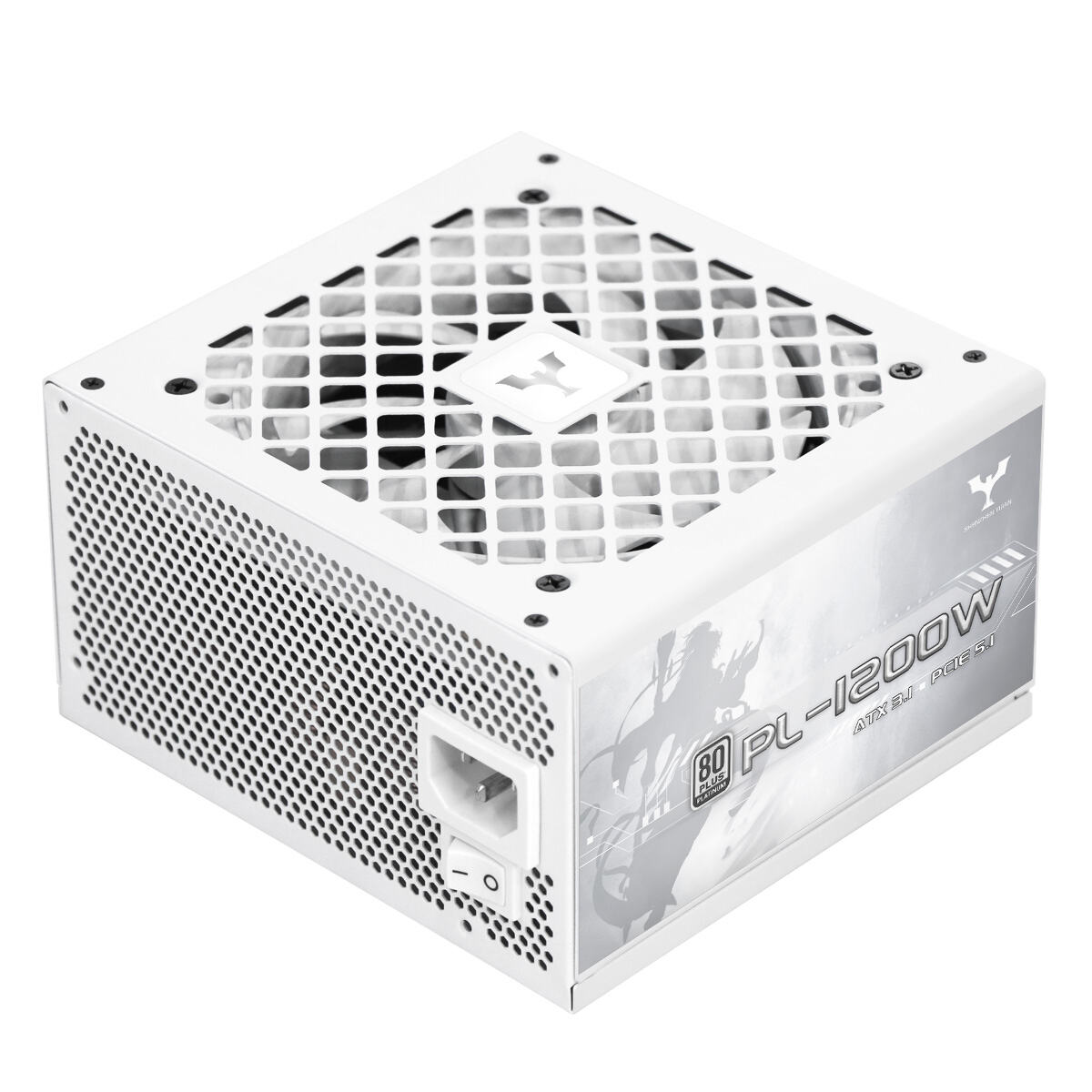
What Is a Full Modular Power Supply? Key Architecture and Design Advantages
Detachable cables vs. fixed wiring: how full modularity enables true customization
A full modular power supply (PSU) features completely detachable cables, unlike non-modular designs where all connectors are permanently soldered in place—or semi-modular variants that retain fixed 24-pin motherboard and CPU cables. This architecture empowers B2B system integrators to connect only the cables required for a given build, eliminating unused wiring that impedes airflow, complicates routing, and increases internal clutter. Independent testing shows this reduces interior cable mass by 37% and improves chassis layout cleanliness by up to 60% compared to non-modular units—critical advantages in compact workstations, multi-GPU servers, and high-density rack deployments. By supporting custom-length replacements and selective cable selection, full modularity streamlines builds, enhances thermal efficiency, and enables PSU reuse across evolving project requirements.
Comparing full modular, semi-modular, and non-modular PSUs for B2B system integrators
| Feature | Non-Modular | Semi-Modular | Full Modular |
|---|---|---|---|
| Cable Attachment | All fixed | Core cables fixed | All detachable |
| Customization Level | None | Limited | Maximum |
| Cable Clutter | High | Moderate | Minimal |
| Ideal Use Case | Budget builds | Balanced cost/function | Premium configurations |
For B2B integrators, non-modular PSUs offer upfront cost savings but introduce significant cable management overhead in dense or service-intensive environments. Semi-modular units strike a middle ground—retaining essential fixed connections while allowing peripheral cables (e.g., PCIe, SATA) to be removed—but still constrain routing flexibility around tight clearances. Full modular PSUs deliver unmatched adaptability: clean cable runs, simplified maintenance, and seamless scalability. Though typically priced 20–30% higher, their operational benefits—including faster builds, lower error rates, and extended hardware reuse—deliver strong ROI in enterprise and data center deployments.
Superior Cable Management and Build Efficiency with Full Modular PSUs
Reduced clutter and precise routing in compact and high-density chassis
Full modular PSUs enable integrators to eliminate redundant cabling entirely—selecting only what’s needed for each system configuration. This precision is indispensable in space-constrained environments like 1U/2U server racks, mini-ITX workstations, and edge computing nodes, where millimeter-level clearance affects both thermal performance and serviceability. Detachable cables allow tension-free bends, optimized pathing around heatsinks and VRM shrouds, and unobstructed access to critical components—reducing internal clutter by up to 40% versus fixed-cable alternatives and directly improving airflow integrity and technician workflow.
Measured cable utilization gains: up to 92% efficiency vs. 41% in non-modular units (80 PLUS Labs, 2023)
Per 80 PLUS Labs’ 2023 cable utilization study, full modular PSUs achieve 92% effective cable usage by removing unused connectors—compared to just 41% in non-modular units, where nearly 60% of bundled wiring remains disconnected and coiled. This efficiency translates into measurable system-level benefits:
- Thermal impact: Unobstructed airflow paths reduce GPU operating temperatures by 6–8°C under sustained load
- Volume reduction: 37% less cable mass occupying cooling zones
-
Maintenance efficiency: 29% faster component swaps in enterprise environments
These gains compound at scale—especially in rack-mounted deployments—where optimized airflow contributes directly to reduced cooling energy consumption and extended component longevity.
Enhanced Thermal Performance and System Stability
Improved airflow dynamics: +18–22% chassis ventilation and lower GPU temps (PC Perspective, 2022)
Full modular PSUs remove a key source of airflow disruption: rigid, fixed cables that bridge between components and block intake/exhaust channels. By enabling clean, direct cable routing along chassis edges or behind motherboard trays, they preserve laminar airflow paths critical for efficient heat dissipation. PC Perspective’s 2022 thermal benchmarking confirmed an 18–22% improvement in overall chassis ventilation efficiency versus non-modular counterparts. The resulting thermal environment significantly lowers GPU and VRM temperatures during extended compute workloads—reducing thermal throttling risk in rendering farms, AI inference nodes, and high-performance B2B workstations. In compact or densely packed systems, this thermal headroom directly supports stable, sustained performance without manual derating or over-provisioning.
Long-Term Value: Simplified Installation, Maintenance, and Future-Proofing
Time savings of 23–37 minutes per mid-tower build and reduced error rates (Tom’s Hardware Build Lab, 2024)
Full modular PSUs accelerate deployment and improve build consistency. Tom’s Hardware Build Lab (2024) documented time savings of 23–37 minutes per mid-tower assembly—driven by faster cable selection, elimination of unnecessary connections, and simplified routing decisions. Controlled testing also showed a 68% reduction in miswiring incidents, particularly around high-pin-count connectors like EPS12V and PCIe. These efficiencies scale meaningfully across enterprise workstation rollouts and data center provisioning, shortening deployment windows and reducing post-build validation effort.
Seamless support for next-gen standards: PCIe 5.0, ATX12V 3.0, and multi-rail NVMe/SATA scalability
The cable-swappable foundation of full modular PSUs provides a practical path to future-proofing. Integrators can adopt new interface standards—including PCIe 5.0’s 12VHPWR connector and ATX12V 3.0’s enhanced dynamic load response—without replacing the entire PSU. Simply swap in certified cables compatible with updated specifications. Similarly, modular architectures natively support flexible multi-rail configurations for simultaneous NVMe and SATA expansions, enabling scalable storage tiers without overhauling power infrastructure. This adaptability extends hardware lifespan, reduces electronic waste, and aligns with sustainable IT infrastructure strategies—making full modularity a strategic investment, not just a convenience feature.
FAQ
What is a full modular power supply?
A full modular power supply is a type of PSU that allows all cables to be detachable, enabling customization based on system requirements.
Why are full modular PSUs preferred by B2B integrators?
Full modular PSUs are preferred due to their ability to minimize cable clutter, improve build efficiency, and allow for easy customization and future-proofing.
How do full modular PSUs contribute to thermal performance?
By eliminating unused cables, they improve airflow dynamics, enhancing chassis ventilation efficiency and lowering component temperatures.