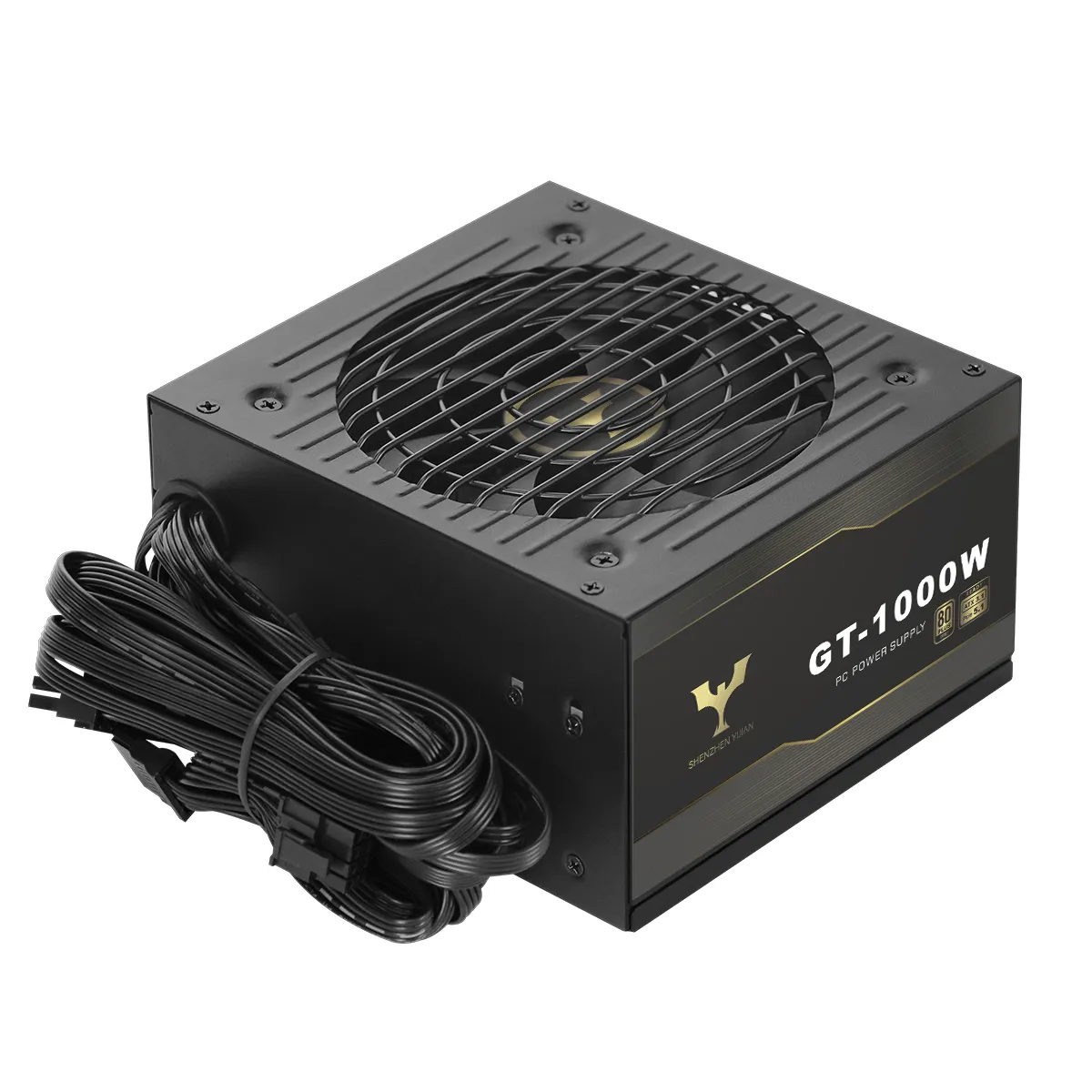
Assessing the Viability of Mid-Range Power Units
Building a system with multiple graphics processing units is an ambitious project that pushes the boundaries of performance, whether for deep learning, high-end rendering, or extreme gaming. A common question among builders is whether a mid-range power supply unit is sufficient for such configurations. In the world of hardware assembly, the simple answer is rarely just about the total wattage; it is about how effectively that power is delivered. While certain wattages might seem adequate on paper, real-world scenarios involving multiple powerful graphics cards often introduce complexities that mid-range units struggle to manage. Recognizing the interplay between consistent power delivery and system stability is the first step toward avoiding the disappointment of system shutdowns or hardware damage. A robust machine requires a power foundation that can handle not just average loads but the unpredictable nature of high-performance components working in unison.
Understanding the Power Dynamics of Multi-GPU Setups
Multi-GPU systems do not just consume static amounts of energy; they demand dynamic power delivery that can fluctuate wildly within milliseconds. Graphics cards are notorious for their transient power spikes—brief moments where the demand for electricity far exceeds the typical operating range specified by the manufacturer. When multiple high-performance cards are linked, these spikes often synchronize, creating an immense electrical surge that can overwhelm standard power supplies. Even if a unit theoretically covers the base power requirements, it may lack the electrical headroom to handle these abrupt spikes. This creates a high risk of the internal protection circuitry triggering a system shutdown, which effectively halts all work and raises serious questions about the long-term reliability of the chosen component during heavy operation.
Calculating the True Power Budget and Efficiency
Professional builders often rely on the principle of efficiency curves when planning their systems. A power supply typically operates at its peak efficiency between a certain percentage of its maximum rated capacity. By pushing a mid-range unit to its upper limits with a multi-GPU configuration, the system drifts into a less efficient range, resulting in higher heat output and potential voltage ripple. Higher heat accelerates the degradation of internal components, meaning that while the system might function under normal loads today, it is effectively aging at an accelerated rate. Achieving a balanced power budget involves accounting for the total thermal design power of the cards, the processor, and the cooling infrastructure, ensuring that the supply remains within its most stable operating zone throughout long hours of intensive compute tasks.
The Role of Rail Stability and Protection Mechanisms
The quality of a power supply is defined by its ability to maintain a rock-solid electrical rail even under intense, uneven loads. In complex systems, the distribution of electricity must be perfectly balanced to prevent one card from starving while the other remains over-volted. Trusted power supply designs incorporate advanced multi-rail protection protocols that monitor current draw across all outputs. If the power supply cannot maintain this balance, the result is often micro-stuttering, graphical artifacts, or hardware degradation. High-performance builds require power units that feature robust over-current and over-power protection, ensuring that the integrity of the electrical signal is maintained regardless of how aggressively the graphics cards are working during rendering or training sessions.
Expert Perspectives on Future-Proofing Your Build
From an industry perspective, selecting a power unit is an investment in the entire machine’s future. Building a multi-GPU rig is an expensive undertaking, and opting for a marginally rated power supply is a false economy. Experts recommend looking toward higher-wattage, server-grade, or workstation-certified units that are designed specifically for high-load continuity. These units offer better capacitor quality, more flexible cable configurations, and the thermal overhead required to survive years of heavy duty. When the goal is to create a machine that does not require constant monitoring or fear of electrical failure, investing in superior power infrastructure is the most logical and cost-effective path forward for any serious professional or hobbyist.
Leveraging Yijian Expertise for Reliable High-Wattage Performance
For those who prioritize performance and peace of mind, choosing the right manufacturing partner is essential. Yijian has established itself as a leader in power supply manufacturing, engineering solutions that thrive under the most demanding electrical conditions. By focusing on industrial-grade compatibility and rigorous stress testing, Yijian ensures that every unit provides the electrical stability required for demanding multi-GPU setups. Yijian leverages a deep understanding of power distribution and a streamlined, professional supply chain to deliver components that empower builders to push their systems to the limit. Partnering with Yijian means gaining access to manufacturing excellence that prioritizes the longevity of hardware, providing the stable power foundation needed to support mission-critical performance for years to come. With a commitment to engineering precision and consistent output, Yijian remains a dedicated partner for those who refuse to compromise on the quality and longevity of their custom builds.
 EN
EN