 EN
EN

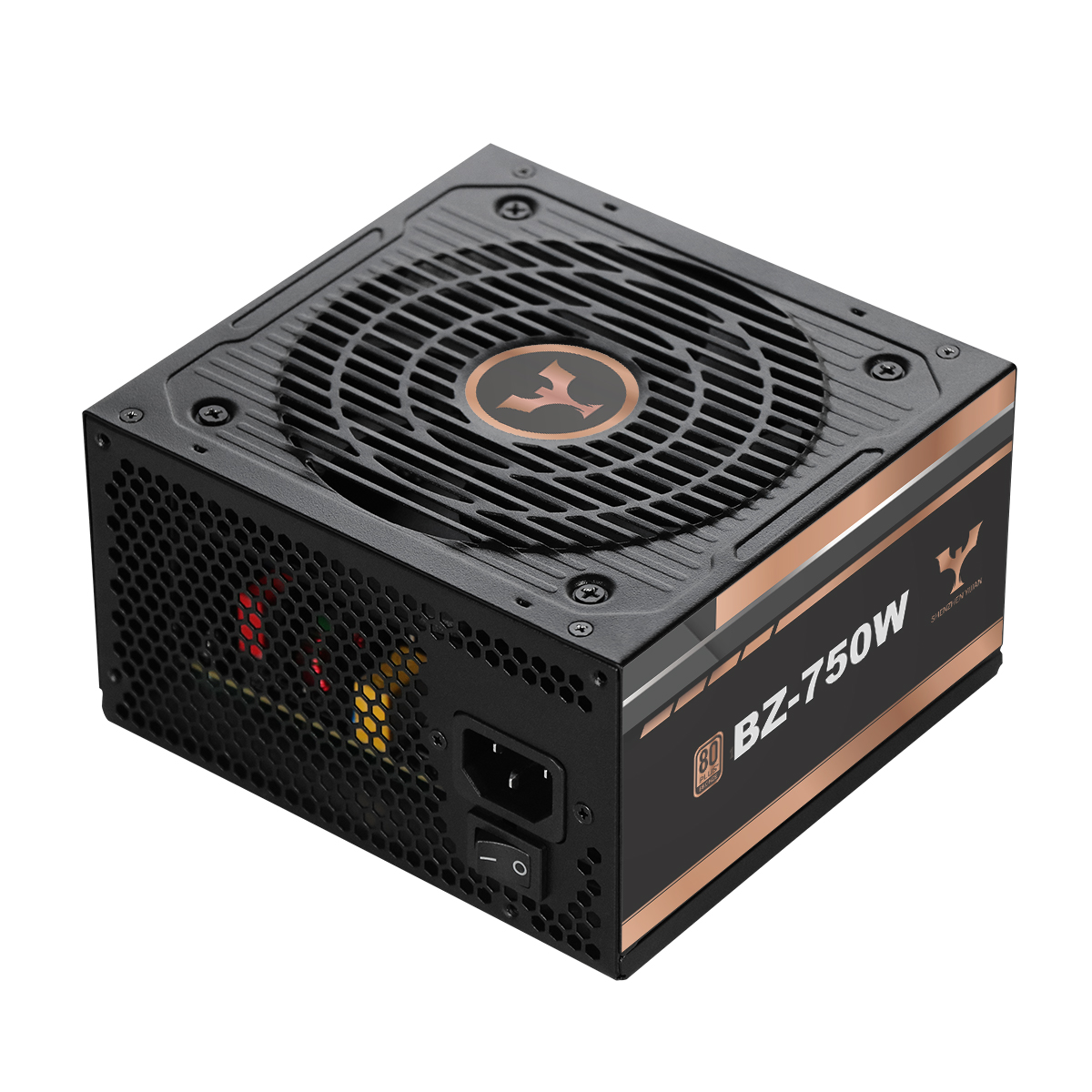
Why Overestimating Power Needs Is Common
Most builders tend to grab power supplies that give them way more wattage than they actually need, usually around 50 to 60 percent extra. They do this mostly because they worry about keeping systems stable and want to leave room for possible upgrades down the road. According to some hardware research from early 2024, about two thirds of people end up buying more power supply than necessary even though most modern computer parts don't come close to needing all that juice in real world usage. The main reason behind this habit? A lot of folks still think there are these big sudden power spikes from graphics cards and that older style multi rail power supplies matter more than they really do now. But honestly, those old worries don't apply much anymore since we have single rail, super efficient power units on the market today.
Matching PSU Wattage to System Usage and GPU Requirements
The power requirements really depend on what someone is trying to do with their system. Top tier graphics cards such as the NVIDIA RTX 4090 need at least 850 watts when running hard for extended periods, whereas regular office computers with built-in graphics can get away with just 300 to 450 watts. Gamers looking to build their rig should make sure the power supply matches the maximum draw of their graphics card, say around 350 watts for an RTX 4080. Content creation setups are different though since they often need to handle both the processor and graphics card working together during video editing sessions. Most mid level builds with something like an RTX 4070 usually run fine on a 650 watt power supply as long as everything else in the system isn't drawing too much extra juice.
Case Study: High End Gaming Rig vs. Office Workstation Power Demands
- Gaming PC: Ryzen 7 7800X3D + RTX 4090 draws 720W under stress testing (recommended: 850W)
-
Workstation: Core i5-14600 + integrated graphics peaks at 120W (optimal: 450W)
Real-world data shows gaming builds utilize 85–90% of PSU capacity during intensive games, whereas office systems rarely exceed 40% load, highlighting the importance of right-sizing.
Rising Efficiency at Low Loads Due to Variable Usage Patterns
Modern 80 Plus Gold PSUs achieve up to 87% efficiency at 20% load, outperforming Bronze units (78%) and reducing idle power waste. For mixed-use systems, this translates to $18–24 in annual energy savings (U.S. average). ATX 3.0-certified units further enhance low-load efficiency and transient response, minimizing voltage fluctuations during sudden power demands.
Understanding 80 Plus Efficiency Ratings: Bronze to Titanium
Consumer Focus on Energy Savings and Heat Reduction
The 80 Plus rating system basically tells us how good a power supply unit (PSU) is at converting AC power from the wall into usable DC power for our computers. Higher ratings mean less energy gets lost as heat, which everyone knows isn't great for either performance or electricity bills. Let's look at some numbers to put this into perspective. Bronze certified PSUs manage around 82 to 85% efficiency when running normal workloads. But if we step up to the top tier Titanium models, these can hit an impressive 94 to 96% efficiency specifically at that sweet spot of 50% load according to the latest 2024 standards. What does all this math actually mean? Well, those better performing Titanium units produce roughly 20 to 30% less heat overall compared to their lower rated counterparts. Less heat means computer cases don't need to work as hard to stay cool, so fans run quieter and components last longer over time.
How 80 Plus Ratings Impact Long-Term Operating Costs
A 750W Bronze PSU running 8 hours daily at $0.15/kWh costs $123 annually, versus $108 for a Titanium unit under identical conditions—a $15/year saving. Over a typical 7-year lifespan, these savings can offset the initial $50–80 premium of high-efficiency models, especially in regions with higher electricity rates.
Comparing Annual Electricity Costs of Bronze vs. Titanium Units
| Metric | 80 Plus Bronze (850W) | 80 Plus Titanium (850W) |
|---|---|---|
| Avg. Efficiency | 85% | 94% |
| Annual Power Draw | 887kWh | 803kWh |
| Yearly Cost ($0.18/kWh) | $159.66 | $144.54 |
Balancing Cost and Efficiency Based on Usage Tier
Basic office computers really don't see much of a difference when moving up from Bronze to Titanium power supplies, usually saving less than five bucks a year. That makes sticking with cheaper models totally worth it for regular office work. But things change for gaming machines with those heavy duty graphics cards drawing over 300 watts. These setups actually get real value out of Gold or Platinum units, knocking around eight to twelve dollars off yearly electricity bills. And then there are content creation stations running at about seventy to eighty percent capacity all day long. For these workhorses, spending extra on Titanium pays off eventually because they run cooler longer and just plain work better over time despite the higher initial price tag.
ATX 3.0 and ATX 3.1 Compliance for Modern GPUs and Future-Proofing
Increased Demand for PCIe 5.0/5.1 GPU Support
Modern GPUs such as NVIDIA’s RTX 40-series require PCI Express® 5.0/5.1 compatibility to support bandwidth-intensive tasks like 4K gaming and AI rendering. These interfaces offer up to 128 GB/s of bidirectional throughput—double that of PCIe 4.0—enabling smoother performance under heavy workloads.
Transient Power Handling and Voltage Stability in ATX 3.0+
ATX 3.0+ certified PSUs can handle transient power spikes up to 200% of their rated capacity, crucial for GPUs that briefly exceed TDP. For example, a 600W ATX 3.0 PSU can manage 1,200W surges without voltage drops, ensuring stable operation during sudden load increases.
Case Study: NVIDIA RTX 40 Series GPUs and Peak Power Spikes
The RTX 4090 has a 450W TDP but can spike to 600W for 100µs during ray tracing. Systems using older ATX 2.x PSUs may experience shutdowns or instability due to inadequate transient handling, while ATX 3.0 units maintain voltage within ±2% under the same conditions.
Industry Adoption of ATX 3.1 with Enhanced Connector Durability
The 2023 ATX 3.1 update introduced the 12V-2x6 connector, replacing the flawed 12VHPWR design. Independent thermal testing found its shorter sense pins reduce overheating risks by 63% compared to early PCIe 5.0 implementations, improving safety and reliability.
Ensuring Future-Proofing with ATX 3.x Certified Units
Choosing an ATX 3.x PSU ensures compatibility with next-generation components, including CPUs and GPUs using 12VO (12V-only) power delivery. These units also improve efficiency at low loads (10–20%), reducing idle power consumption by up to 29% versus ATX 2.x models (Cybenetics Labs, 2024).
Key Connectors: 12VHPWR vs. 12V-2x6 for PCIe 5.0/5.1 Graphics Cards
Connector Failures in Early 12VHPWR Implementations
Early PCIe 5.0 GPUs using 12VHPWR connectors faced reliability issues, with thermal failures occurring in 0.3% of high-wattage systems (2023 industry analysis). Incomplete cable insertion led to resistance spikes and, in extreme cases, melted connectors—prompting redesigns across the industry.
Safe Power Delivery and Thermal Management of New Connectors
The 12V-2x6 connector improves reliability through:
- 0.15mm longer power terminals for secure contact
- Shorter sense pins to prevent partial engagement
- Reinforced housings rated for 50+ insertions
Recalls and Redesigns by Major PSU Manufacturers
In 2023, four major brands issued voluntary recalls of 12VHPWR-equipped PSUs, implementing:
- Stronger connector latching mechanisms
- High-temperature PCBs (rated to 105°C)
- Upgraded 16AWG wiring from previous 18AWG designs
Are 12V-2x6 Connectors More Reliable Than 12VHPWR?
Testing shows the 12V-2x6 reduces thermal variance by 18% under 450W loads. While both meet PCIe 5.1 specs, the updated design eliminates the primary failure modes seen in first-gen 12VHPWR units, offering superior long-term reliability.
Choosing PSUs with Robust Cable Design and Manufacturer Warranties
Look for PSUs with:
- Molded cable junctions and strain relief
- Gold-plated terminals (¥30µ thickness)
- 10-year warranties covering connector damage
Third-party validation from labs like Cybenetics provides stronger assurance than manufacturer claims alone.
Form Factor, Protection Features, and Reliability Considerations
Matching PSU Size: ATX, SFX, and SFX-L for Case Compatibility
Getting the right form factor makes all the difference when it comes to fitting components properly and maintaining good airflow inside the case. Standard ATX power supplies measure around 150 by 86 by 140 millimeters and generally work well in most mid tower computer cases. For those building smaller systems, especially mini ITX setups, SFX models at approximately 100x63x125 mm or the slightly larger SFX-L variant measuring roughly 130x63x125 mm become much better options. Choosing the appropriate size isn't just about space constraints either. When components aren't sized correctly, they can obstruct air flow paths which leads to overheating issues down the road. Plus, working with appropriately sized hardware makes running cables throughout the case so much easier without having to force things into tight spaces.
Verifying Clearance for Cables and Airflow in Compact Builds
In small cases, oversized PSUs or poor cable management can restrict airflow. Ensure at least 30mm of clearance behind the PSU for connectors and cables. A 2023 thermal study showed inadequate airflow increased GPU temperatures by 12°C under load.
Essential Protective Features: OVP, OCP, OPP, and SCP
Quality PSUs include Over Voltage Protection (OVP), Over Current Protection (OCP), Over Power Protection (OPP), and Short Circuit Protection (SCP). OCP alone reduces the risk of component burnout by 74% during overloads (Hardware Safety Report, 2023), safeguarding expensive parts like GPUs and motherboards.
Case Study: Failed PSU Without OCP Leading to GPU Burnout
A budget PSU lacking OCP delivered 14.2V to the 12V rail during a GPU spike—20% above safe limits—destroying a $700 graphics card. The resulting $420 repair underscores the value of comprehensive protection circuits.
Modular vs. Non-Modular Designs for Clean Cable Management
Modular PSUs let you remove unused cables, improving airflow and aesthetics. Benchmarks show fully modular units reduce internal temps by up to 8°C compared to non-modular designs. Semi-modular options offer a practical balance for budget-conscious builders.
Selecting Trusted Brands with Strong Warranty and RMA Support
Opt for manufacturers offering 7–10 year warranties and reliable RMA service. Top-tier brands report less than 2% failure rates in the first five years, versus 11% for no-name units (Consumer Hardware Reliability Index, 2023). A solid warranty reflects confidence in build quality and long-term reliability.