 EN
EN

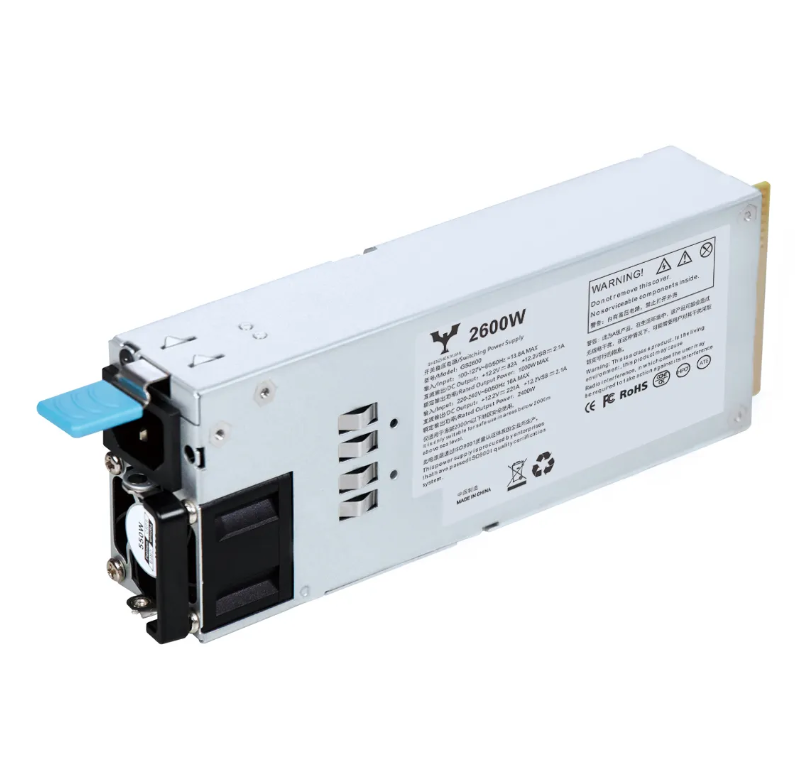
In industrial environments—such as manufacturing workshops, data centers for industrial control, and automated production lines—equipment downtime can lead to huge economic losses and operational disruptions. This makes the industrial Redundant power supply a core component that ensures continuous operation, as it provides backup power support to avoid outages caused by single power supply failures. However, selecting a suitable industrial Redundant power supply requires considering factors like harsh environmental conditions, load variability, and long-term reliability. For enterprises seeking customized solutions, partnering with a professional Redundant power supply OEM is equally critical. This article will detail the key steps for selection and highlight how Yijian, as a trusted manufacturer, supports industrial needs.
Clarify the Core Application Requirements of Industrial Redundant power supply
Different industrial scenarios have unique demands for industrial Redundant power supply, so the first step is to align the selection with specific application needs.
Adapt to Harsh Industrial Environmental Conditions
Industrial sites often face extreme conditions such as high temperatures, high humidity, dust, vibration, and electromagnetic interference—all of which directly affect the performance of industrial Redundant power supply. For example, in a steel factory’s control room, ambient temperatures may exceed 40°C, requiring the power supply to operate stably within a wide temperature range (typically -20°C to 70°C). In automated assembly lines with constant mechanical vibration, the power supply must have anti-vibration designs (e.g., reinforced casings and shock-absorbing components) to prevent internal component damage. Yijian, when developing industrial Redundant power supply, integrates environmental adaptability into the design—using high-temperature resistant capacitors and anti-corrosion materials—to meet the harsh conditions of diverse industrial sites.
Match the Load Characteristics of Industrial Equipment
The load capacity and stability requirements of industrial equipment vary significantly. For instance, industrial servers and PLCs (Programmable Logic Controllers) have steady load demands, while motor-driven equipment may have sudden load spikes. When selecting an industrial Redundant power supply, it is essential to calculate the total load power of the connected equipment and reserve 20%–30% of power margin to handle peak loads. For example, if the total load of a production line’s control system is 800W, a 1000W–1200W industrial Redundant power supply is recommended. For enterprises with unique load requirements, a Redundant power supply OEM like Yijian can customize power capacity and load adjustment functions—such as supporting dynamic load balancing—to match specific equipment needs.
Screen Key Technical Parameters of Industrial Redundant power supply
Technical parameters determine the reliability and compatibility of industrial Redundant power supply, so focus on the following critical indicators.
Choose the Appropriate Redundancy Architecture
The core value of industrial Redundant power supply lies in its redundancy architecture, which directly affects fault tolerance. Common architectures include “1+1” and “N+1”:
- “1+1” architecture: Two identical power modules work in parallel; if one fails, the other immediately takes over full load. It is suitable for small-scale industrial equipment with low load demands, such as single-machine control systems.
- “N+1” architecture: N modules meet normal load needs, and 1 module acts as a backup. For example, 3+1 architecture uses 3 modules for 1200W load (400W each) and 1 backup module, ideal for large-scale industrial systems like factory-wide automation networks.
Yijian, as a Redundant power supply OEM, offers flexible architecture customization—supporting both 1+1 and N+1 designs—and optimizes module communication protocols to ensure seamless switching (within 10ms) when a fault occurs, minimizing impact on industrial operations.
Ensure Power Efficiency and Heat Dissipation Performance
Industrial Redundant power supply operates continuously for long periods, so high efficiency reduces energy consumption and heat generation—key to extending service life. Look for products with efficiency levels of 85% or higher (e.g., meeting 80 PLUS Bronze or above standards). For example, Yijian’s industrial Redundant power supply achieves 88% efficiency at 50% load, reducing heat output and lowering cooling costs for industrial cabinets.
Heat dissipation design is also critical. In enclosed industrial cabinets, power supplies should use efficient cooling methods such as dual ball-bearing fans (with longer life than sleeve bearings) or passive heat dissipation for dust-sensitive environments. Yijian’s R&D team optimizes heat dissipation structures based on OEM requirements, ensuring the industrial Redundant power supply operates stably even in high-temperature, poorly ventilated spaces.
Select a Reliable Redundant power supply OEM Partner
For enterprises needing customized industrial Redundant power supply, partnering with a professional Redundant power supply OEM is a strategic choice. Evaluate potential partners based on the following criteria:
Technical Customization Capabilities
A qualified Redundant power supply OEM should adapt to diverse industrial needs—such as customizing input/output voltages (e.g., 220V AC or 48V DC), adding communication interfaces (RS485, Modbus for remote monitoring), or designing compact sizes for space-constrained equipment. Yijian, as a National High-tech Enterprise with over 20 appearance design patents and 100+ professional certifications, has strong R&D capabilities to tailor industrial Redundant power supply solutions. For example, it developed a compact 1U height industrial Redundant power supply for a European automation client, fitting into their slim control cabinets.
Production Scale and Delivery Capacity
Industrial projects often require large-batch orders with tight timelines, so the Redundant power supply OEM’s production scale matters. Yijian has a 20,000-square-meter factory integrating R&D, design, production, and sales, with automated assembly lines that can produce up to 50,000 industrial Redundant power supply units monthly. Its lean production management ensures on-time delivery—critical for industrial clients launching new production lines or expanding operations.
Global Compliance Certifications
Industrial products are often exported globally, so the industrial Redundant power supply must meet regional safety and electromagnetic compatibility (EMC) standards. Yijian’s products have passed UL (US), TUV (Europe), 3C (China), CB (international), FCC (US EMC), CE (Europe), and other certifications. As a Redundant power supply OEM, it ensures customized products comply with target market standards—saving clients time and costs in certification processes.
Prioritize Quality Control and Long-Term Reliability
Industrial Redundant power supply needs to operate reliably for 5–10 years, so strict quality control and after-sales support are essential.
Rigorous Testing Standards
The Redundant power supply OEM should conduct comprehensive tests on industrial Redundant power supply, including:
- High-temperature and low-temperature tests: Operating at -40°C to 85°C for 1000 hours to verify stability.
- Vibration and shock tests: Simulating transportation and on-site vibration (up to 50G shock) to ensure component durability.
- Aging tests: Running at full load for 72 hours to screen out early faults.
Yijian implements ISO9001 quality management system, with 12 inspection nodes in the production process. Every industrial Redundant power supply undergoes 28+ tests before leaving the factory—ensuring high reliability.
Long-Term After-Sales Support
Even with high-quality products, industrial clients need timely after-sales service. Yijian adheres to a “customer-centered” philosophy, providing 24/7 technical support via phone and email. For global clients, it has local service centers in the US, Europe, and Southeast Asia—enabling on-site maintenance within 48 hours. As a Redundant power supply OEM, it also offers a 5-year warranty for industrial Redundant power supply—longer than the industry average of 3 years—reducing clients’ maintenance costs.
Conclusion
Selecting the right industrial Redundant power supply requires aligning with application needs, screening technical parameters, partnering with a reliable Redundant power supply OEM, and prioritizing quality. Yijian, with its strong R&D, large-scale production, global certifications, and strict quality control, is an ideal partner for industrial clients seeking high-performance industrial Redundant power supply solutions. By focusing on these key steps, enterprises can ensure their industrial equipment operates continuously—avoiding downtime and maximizing operational efficiency.