 EN
EN

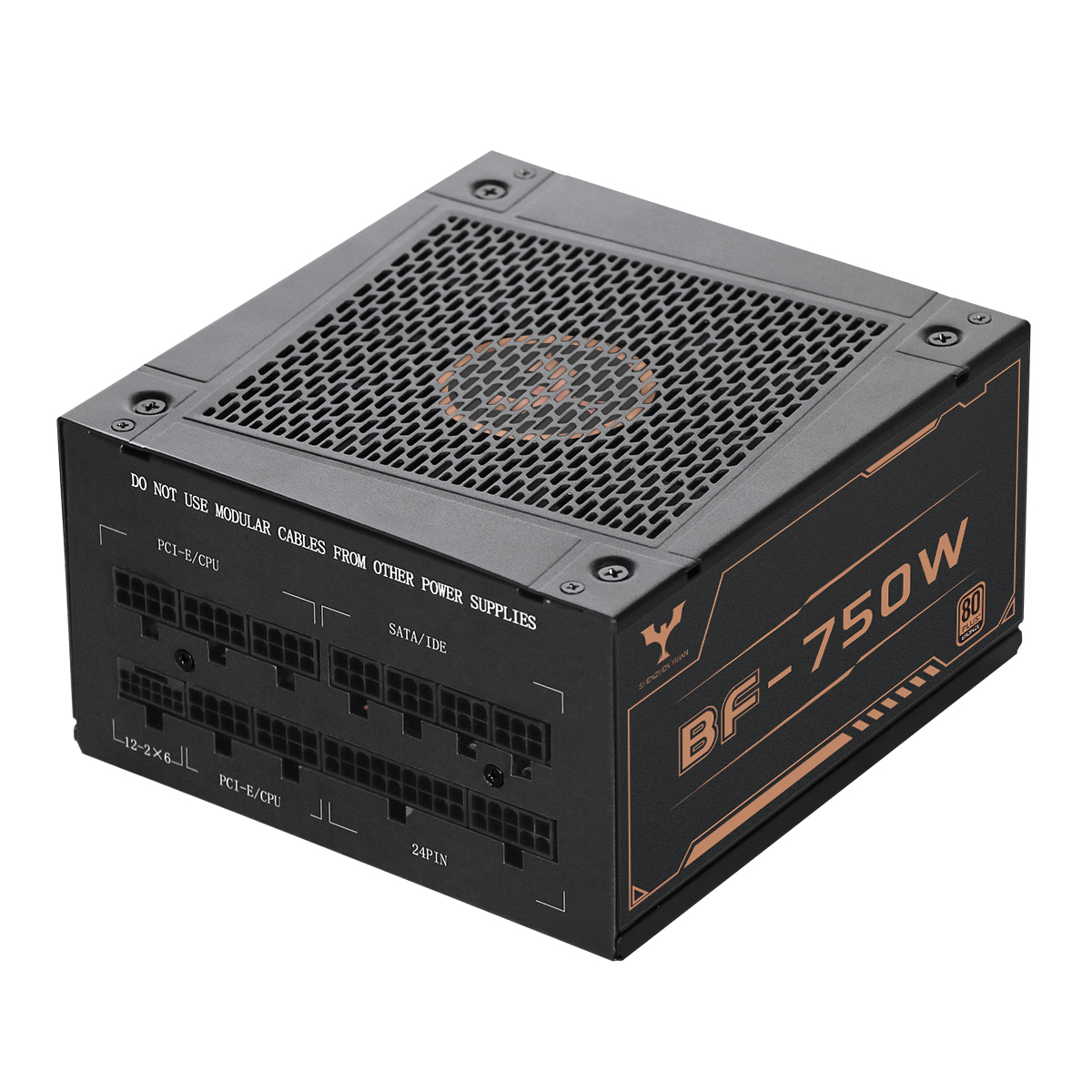
Core PC Power Supply Selection Criteria for Server Reliability
Matching Wattage to Real-World Server Load Profiles and Headroom Needs
Accurate wattage calculation is foundational for server stability. Audit all components—CPU, memory, storage, and expansion cards—and sum their peak power demands. Then add a 20–30% headroom buffer: this accommodates load spikes during backups or analytics workloads and supports future upgrades without replacement. For example, a server drawing 600W at peak requires at least a 750W PSU to sustain safe voltage regulation and thermal margins. Undersizing risks crashes, data corruption, and accelerated capacitor aging due to sustained overloading. Crucially, PSUs operate most efficiently—and reliably—at 50–80% of rated capacity, striking the optimal balance between energy conversion, heat generation, and long-term durability in continuous operation.
AC Input Flexibility and DC Output Regulation Under Variable Loads
Server-grade power supplies must maintain stable DC output despite global AC grid variations. Prioritize units with universal 100–240V AC input and active Power Factor Correction (PFC), which improves energy utilization and ensures compatibility across regions. For DC integrity, verify ±3% voltage regulation on +12V, +5V, and +3.3V rails under dynamic loads—from 10% idle to full 100% draw. Ripple on the +12V rail must remain below 120mV (per ATX specification) to prevent signal noise that can corrupt data transfers in NVMe arrays or cause timing errors in high-speed interconnects. This level of electrical precision isn’t optional—it’s essential for preventing silent failures in uptime-critical infrastructure.
Server-Grade vs. Standard PC Power Supply: Key Engineering Differences
MTBF, Component Quality, and 24/7 Thermal Design for Mission-Critical Uptime
Server-grade power supplies are built for unbroken 24/7 operation using industrial-grade components—such as 105°C-rated solid-state capacitors and reinforced PCB traces—that deliver MTBF ratings exceeding 200,000 hours, far surpassing consumer-grade units. Unlike standard PC PSUs designed for intermittent use, server models integrate multi-stage thermal management: variable-speed fans, precision copper-alloy heat sinks, and airflow-optimized chassis mounting keep internal temperatures below 45°C even at full load. This thermal discipline prevents derating and maintains ±1% voltage regulation during grid sags—critical for RAID controllers and failover clusters where sub-millisecond dips can trigger unwarranted reboots or volume corruption.
Redundancy, Efficiency Certification, and Thermal Management
N+1 Redundant PC Power Supply Architecture and Hot-Swap Implementation
N+1 redundancy deploys one additional power supply beyond the minimum required—so a dual-PSU system (1+1) continues full operation if either unit fails. When paired with hot-swap capability, it enables field replacement without powering down the server—a non-negotiable feature for financial, healthcare, or cloud infrastructure requiring five-nines (99.999%) uptime. Successful implementation depends on chassis-level support: standardized backplanes, shared load-balancing circuitry, and mechanical interlocks that ensure seamless handoff during insertion or removal. Without these integrations, redundancy becomes theoretical rather than operational.
80 Plus Titanium/Platinum Certification and Its Impact on Data Center TCO
80 Plus Titanium (≥94% efficiency at 50% load) and Platinum (≥92%) represent the highest commercially available efficiency benchmarks for server power supplies. Their impact extends beyond electricity savings: reduced waste heat lowers cooling demand—cutting HVAC energy use by up to 35% in dense deployments, since cooling accounts for 30–40% of total data center power consumption. That thermal advantage also slows component degradation, extending motherboard and drive lifespans. Though upfront costs run 20–30% higher than Gold-certified units, ROI typically occurs within 18–24 months in production environments running above 60% average utilization.
Hardware Compatibility: Form Factors, Connectors, and Chassis Integration
EPS12V, CRPS, and Proprietary Server PSU Form Factors Explained
Physical compatibility is as critical as electrical performance. The EPS12V standard—originally for high-end workstations—features an extended 8-pin CPU connector and robust airflow shrouding, making it ideal for tower and mid-tower servers where thermal headroom matters. In contrast, CRPS (Common Redundant Power Supply) dominates rack environments: its compact, hot-swap–ready design fits tightly into 1U and 2U chassis while maintaining ≥80% airflow efficiency through standardized mounting and venting. Major OEMs like Dell and HPE use proprietary form factors to fine-tune thermal paths and power delivery for specific platforms—but at the cost of vendor lock-in and zero cross-compatibility.
| Form Factor | Primary Use Case | Interchangeability |
|---|---|---|
| EPS12V | Tower servers/workstations | High |
| CRPS | Rack servers (1U/2U) | Moderate |
| Proprietary | Brand-specific optimized builds | None |
Proprietary designs often achieve 5–10°C lower internal temps than generic alternatives—but only within their native chassis. Always confirm physical clearance, mounting screw patterns, and connector alignment before deployment to avoid airflow blockage or forced insertion damage.
FAQ Section
How do I calculate the right power supply wattage for my server?
To calculate the right wattage, add the peak power demands of all components—CPU, memory, storage, and expansion cards—and include a 20–30% headroom buffer to accommodate load spikes and future upgrades.
What is the benefit of 80 Plus Titanium certification for power supplies?
Power supplies with 80 Plus Titanium certification achieve ≥94% efficiency at 50% load, reducing waste heat and cooling costs while extending component lifespans.
Why is redundancy essential in server power supplies?
Redundancy ensures continuous operation even if one power supply unit fails. When paired with hot-swap capability, it allows replacement without downtime, critical for uptime-sensitive industries.
What is the difference between EPS12V and CRPS power supply standards?
EPS12V is suitable for tower servers and workstations, offering robust airflow and compatibility. CRPS is optimized for rack servers, providing a compact, hot-swap–ready design for dense deployments.
Are proprietary power supplies a good choice?
Proprietary power supplies are optimized for specific platforms, offering better thermal performance, but they lack interchangeability and may lock you into a specific vendor.
Table of Contents
- Core PC Power Supply Selection Criteria for Server Reliability
- Server-Grade vs. Standard PC Power Supply: Key Engineering Differences
- Redundancy, Efficiency Certification, and Thermal Management
- Hardware Compatibility: Form Factors, Connectors, and Chassis Integration
-
FAQ Section
- How do I calculate the right power supply wattage for my server?
- What is the benefit of 80 Plus Titanium certification for power supplies?
- Why is redundancy essential in server power supplies?
- What is the difference between EPS12V and CRPS power supply standards?
- Are proprietary power supplies a good choice?